- Feb 6, 2024
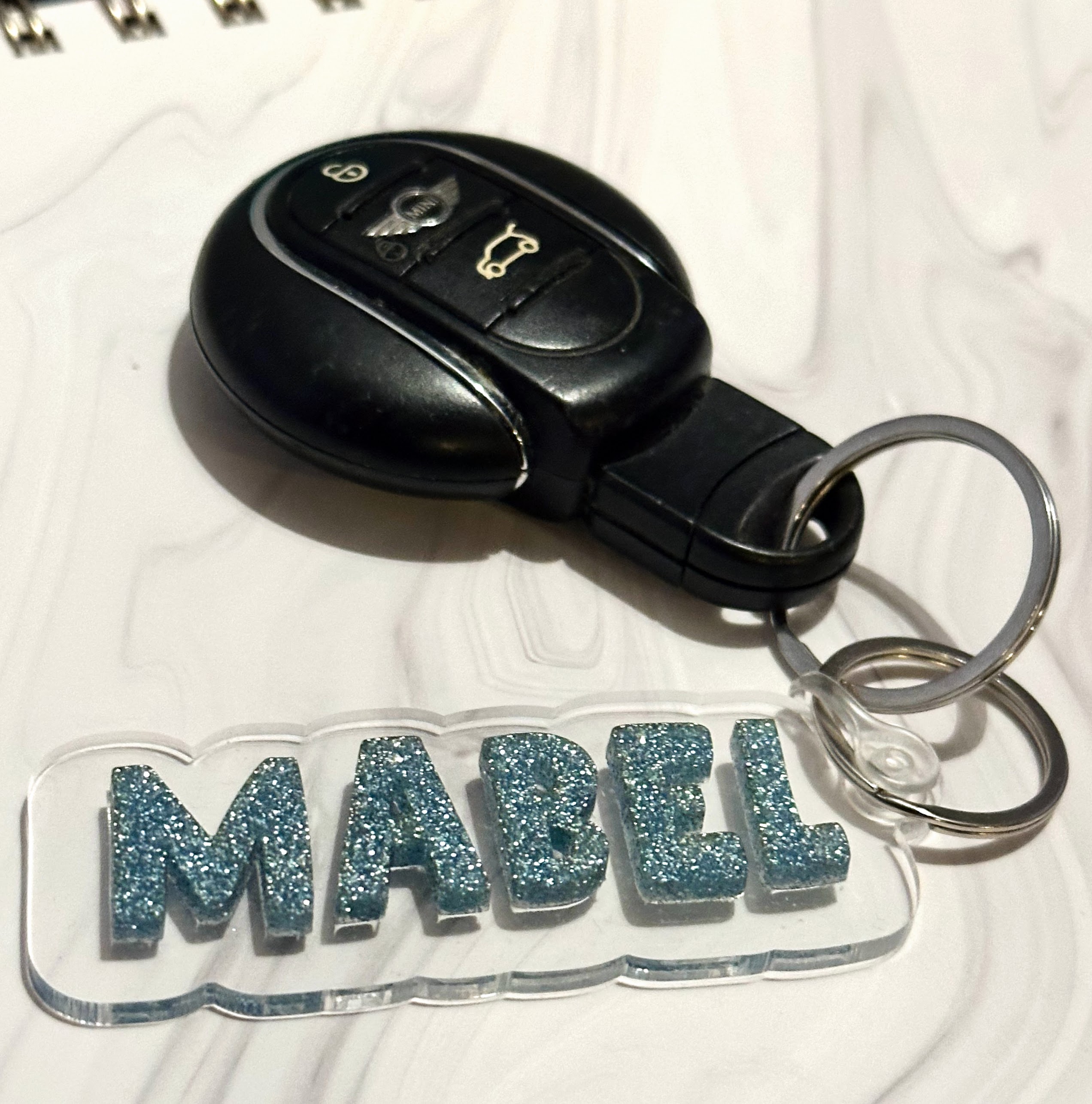
Learn How to Design with Samantha: Layered Name Keychains in Adobe Illustrator
- Samantha Ludwitzke
- 0 comments
I've seen a few posts in forums I'm in where makers are asking how to make name keychains, so I wanted to make a tutorial on how to design them using a few of the more popular design programs. For this video and blog post, I've detailed the instructions for Adobe Illustrator. I've got tutorial posts for other design programs, too! I've linked them in the materials section below.
Materials:
1/8 acrylic in two different colors - I am partial to Craft Closet, Cerulean Tides, Houston Acrylic, Custom Made Better, or Smokey Hill Designs.
Keychain thingie connector piece
Split ring
Adhesive - I use either double sided adhesive tape or All Craft glue from CT
Your laser
-
Design program of your choice. Here are the links for Lightburn, Silhouette Studio, and Inkscape.
Below, I've broken out the instructions for Adobe Illustrator.
Here's how to create your own using Adobe Illustrator
(The default Adobe Illustrator keyboard shortcut guide can be found here!)
-
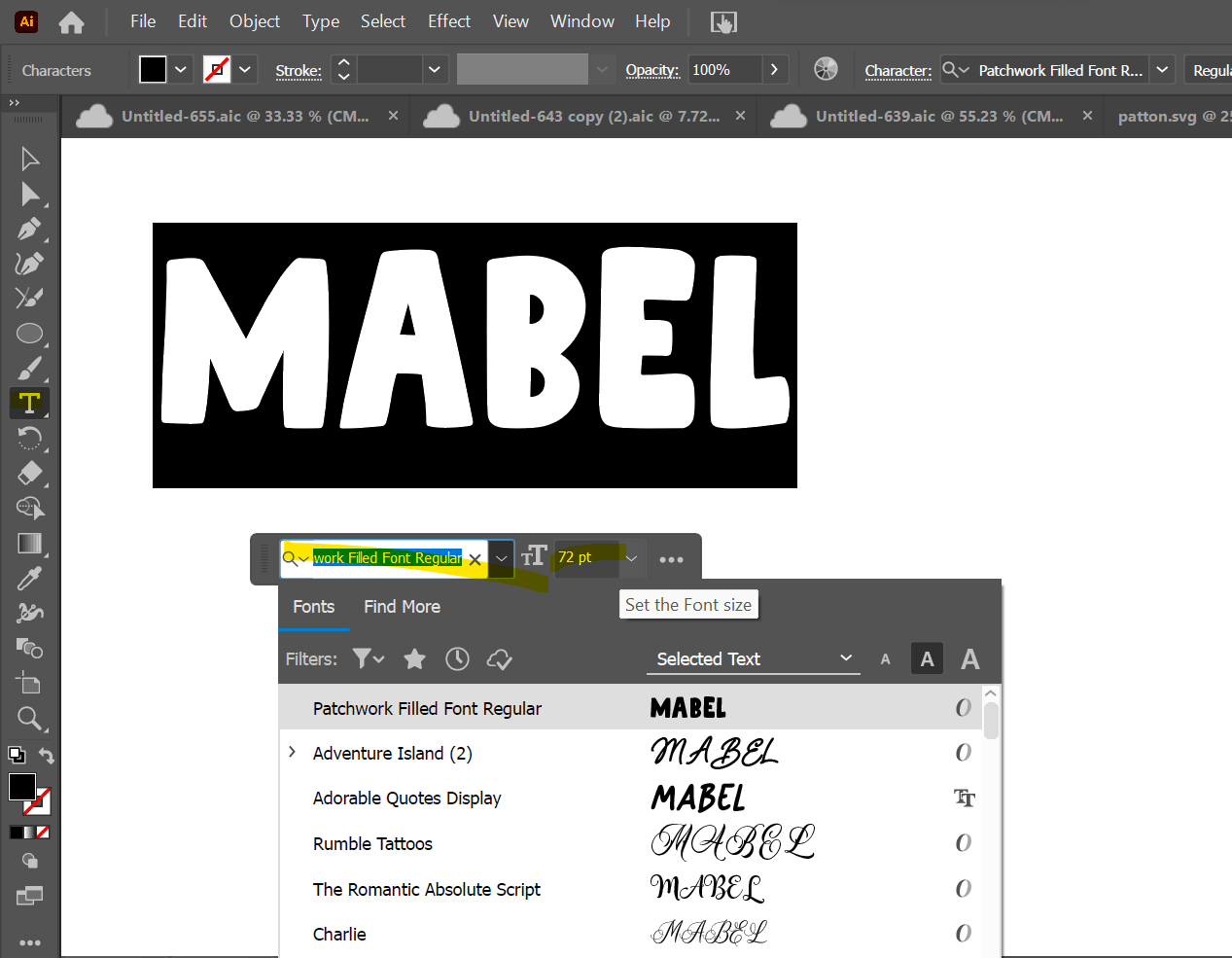
Type text and choose font. I used Patchwork from Creative Fabrica. (This is an affiliate link and I may earn a small commission if you purchase from it.) I recommend making your keychain around 3 inches in length. When making your text, keep this in mind that you will be adding about an inch of offset around it.
-
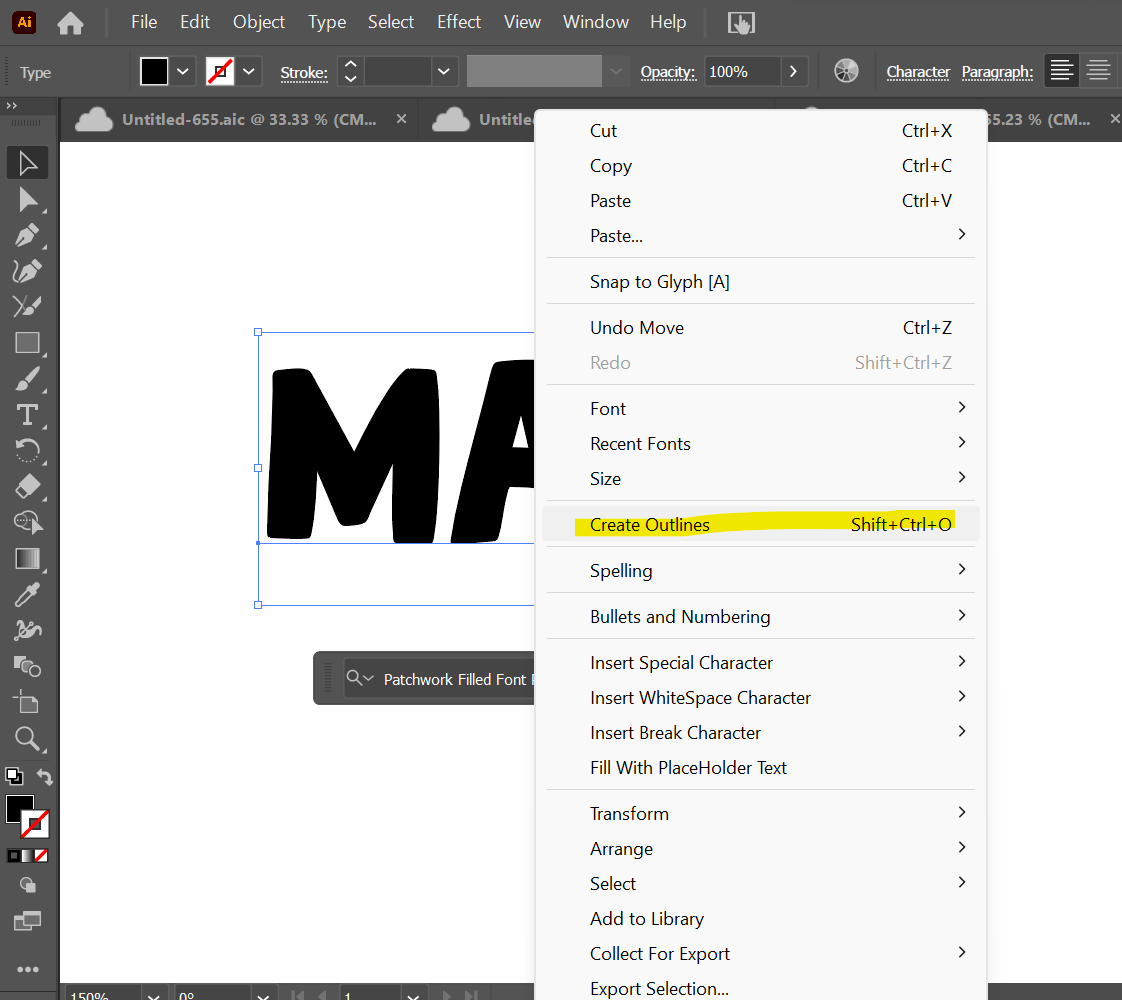
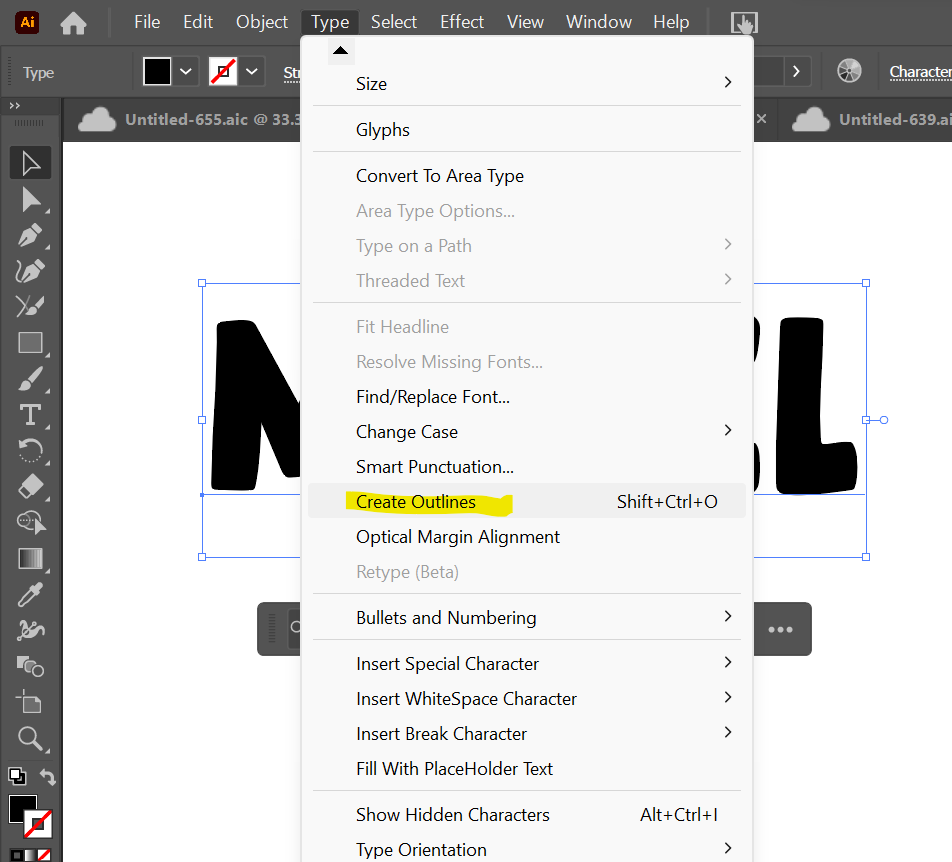
Right click and select "Create Outlines" OR go to the "Type" Menu and select "Create Outlines" OR use keyboard shortcut SHIFT + CTRL + O (Windows) or SHIFT + CMD + O (Mac)
-
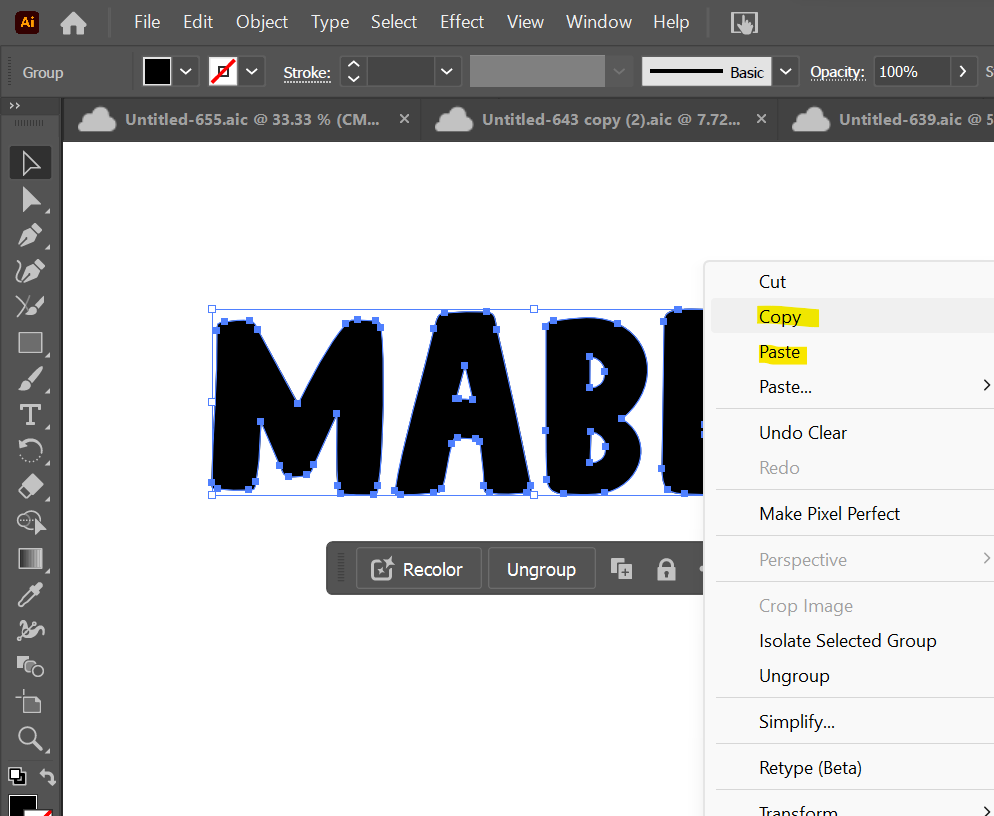
Copy using CTRL + C (Windows) or CMD + C (Mac) and Paste using CTRL + V (Windows) or CMD + V (Mac) or right click and select copy and paste
-
Create your 2 offsets by following the below instructions. One will be for the interior offset (aka inset) to help with scoring placement, and one will be your contour cut backer piece for the base of the keychain.
Click on the duplicated text.
-
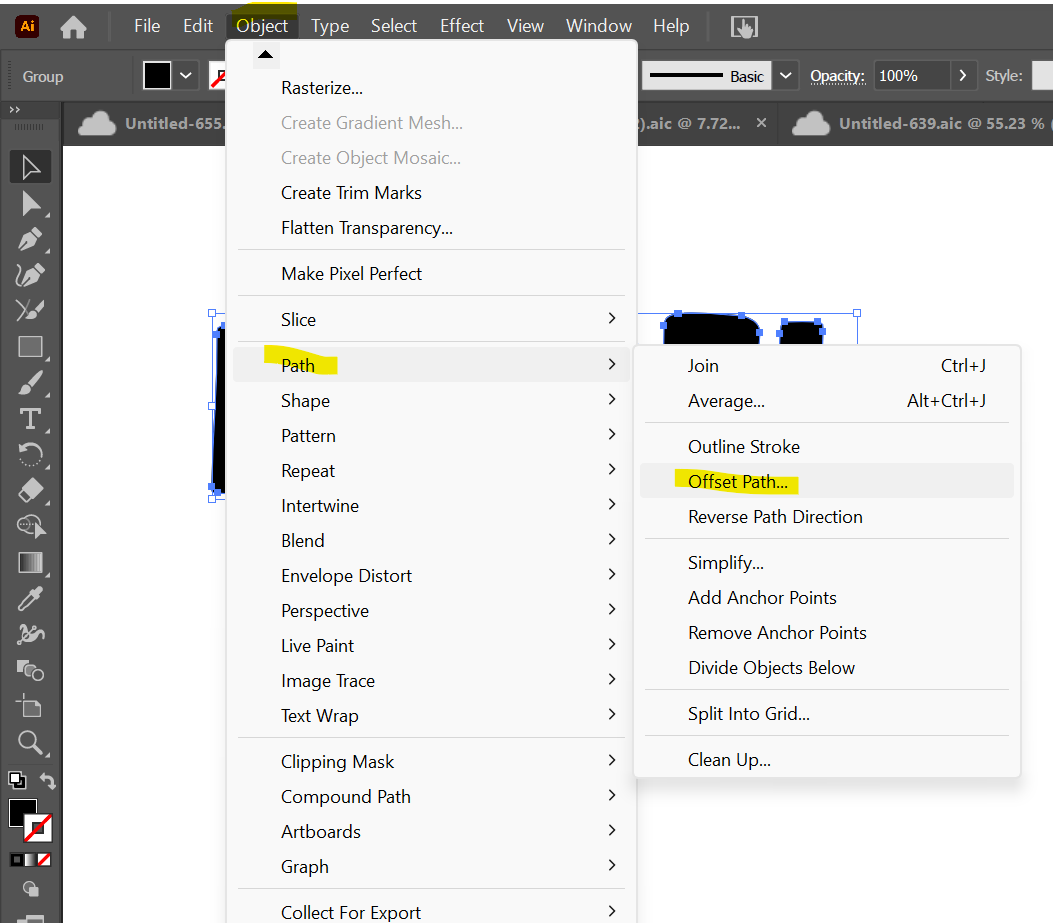
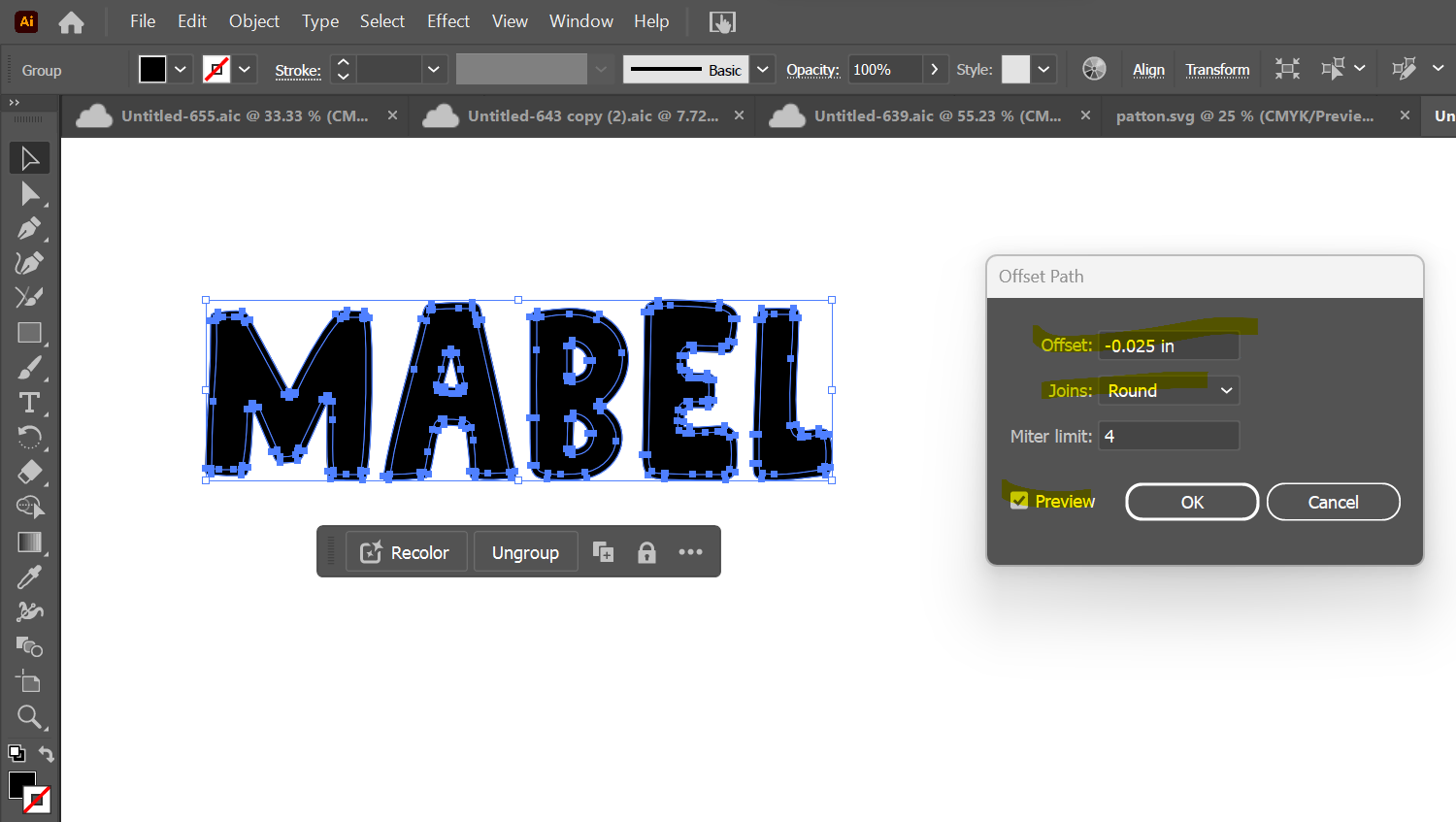
Go to the "Object" menu and select "Path," then "Offset path." Make sure the option for the "Joins" drop down menu is "Round," and toggle the check mark for "Preview" so you can see what it will be.
-
For your interior offset, use a negative number. I usually do -0.025 inches so it is slight enough to retain it's shape but still be hidden by your text layer.
Before clicking off the new path, cut & paste it off to the side so it is separated from the original text. You can do this with keyboard shortcuts CTRL + X (Windows) or CMD + X (Mac) or by right clicking and selecting cut and paste. This just makes it so your inset text isn't grouped to the original.
-
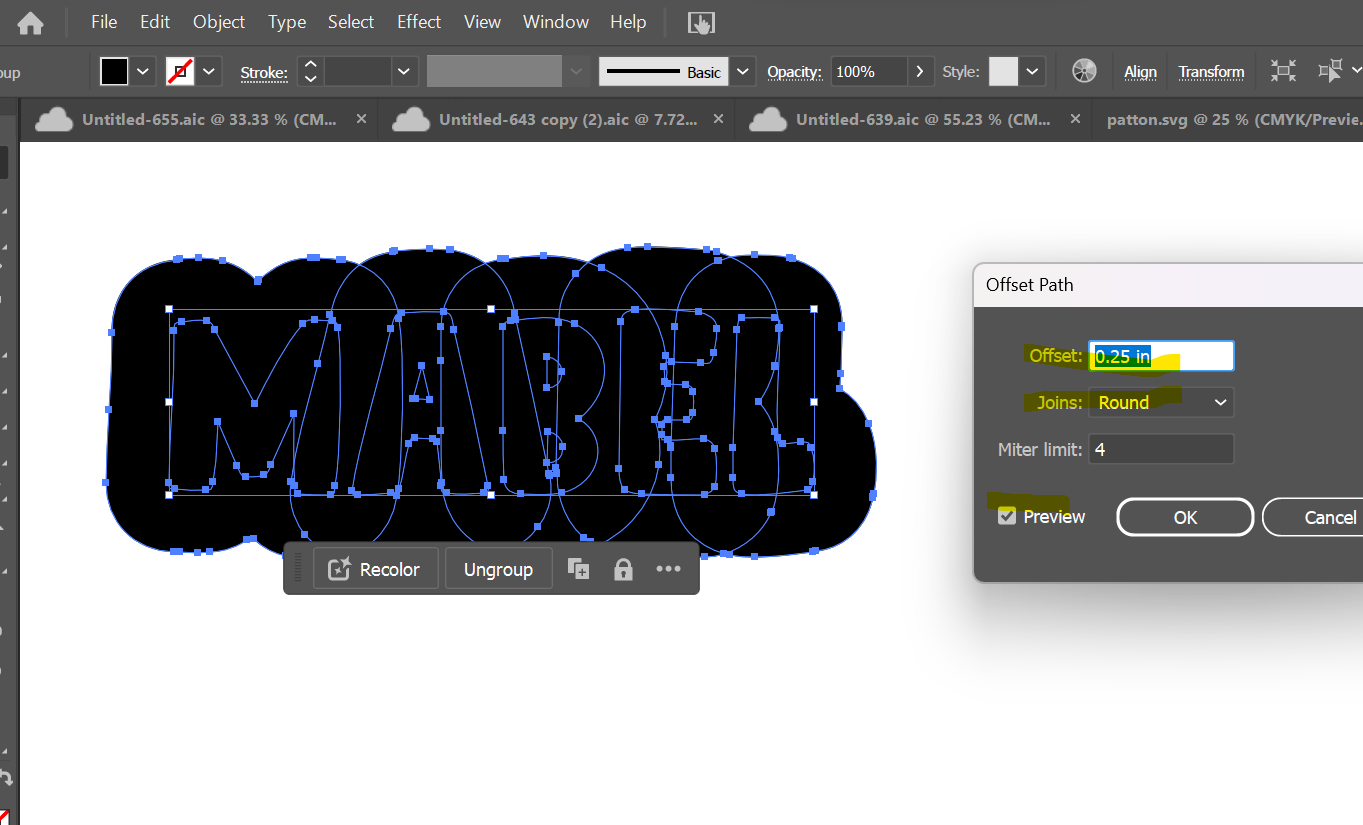
Click back on your text and repeat the "Object," > "Path," > "Offset Path" function. This time, you are going to use a positive number. I like to use 0.25 inches. You will not need to cut & paste it since you will be welding this whole piece as your backer.
-
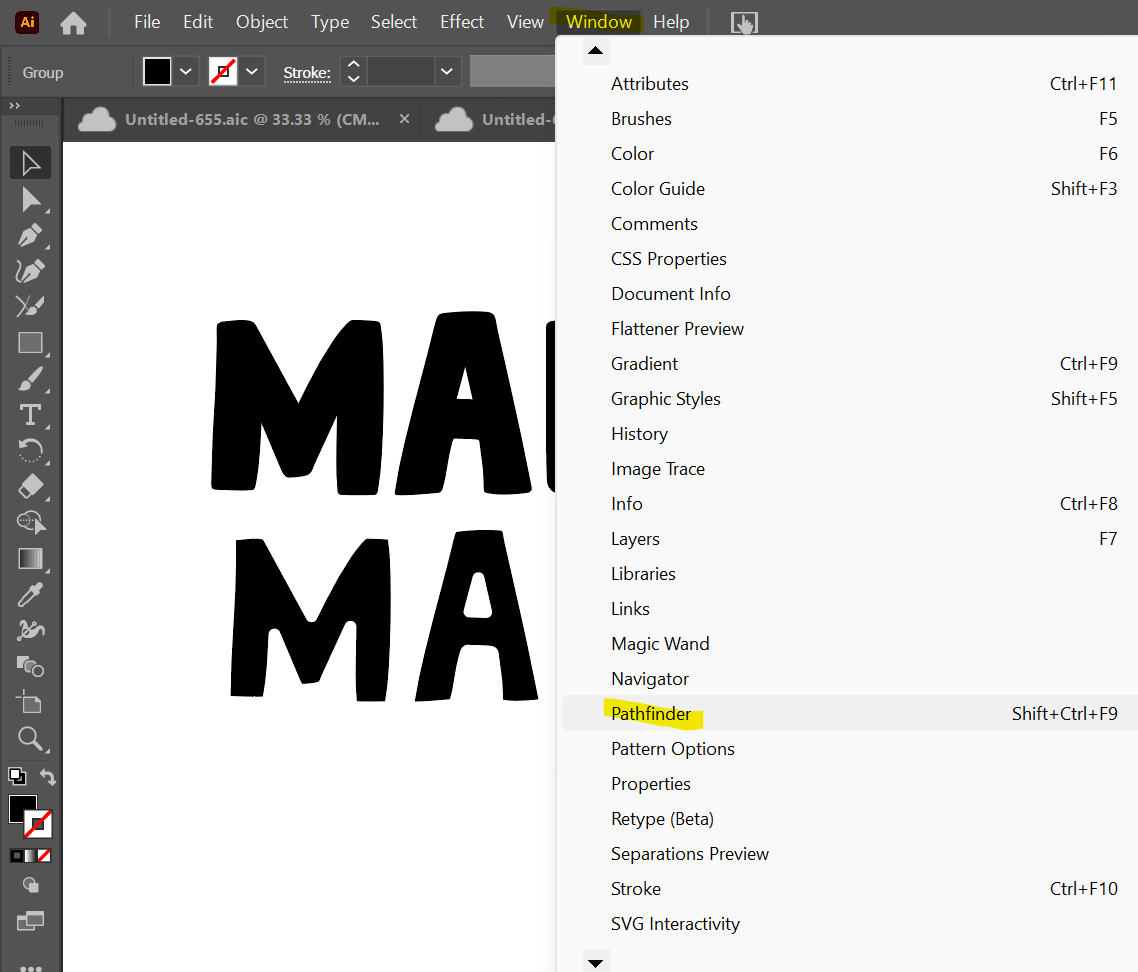
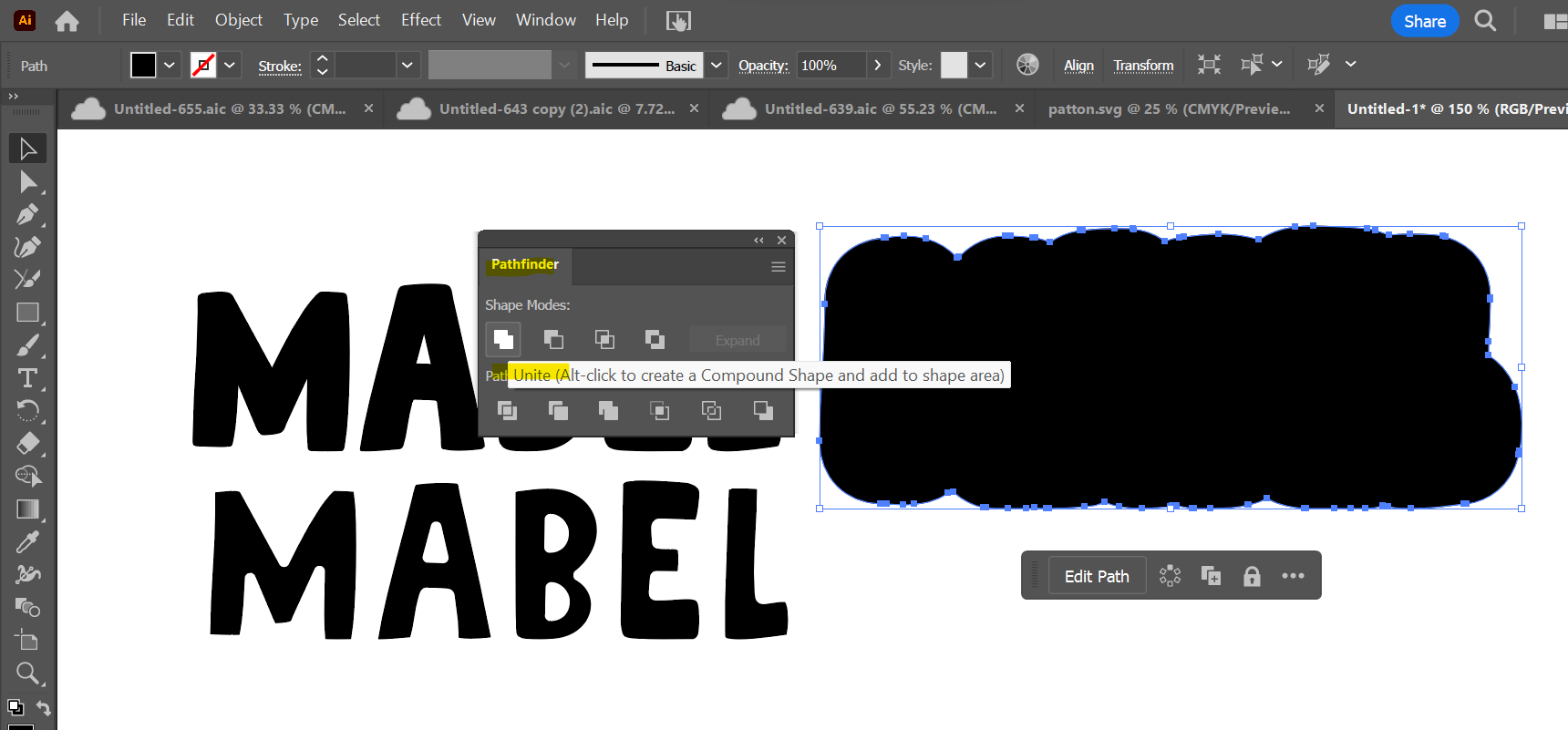
Select the entire word including the offset, then open your "Pathfinder" window. You can find the "Pathfinder" window by doing "Window," select "Pathfinder" or by doing SHIFT + CTRL + F9 (Windows) or SHIFT + CMD + F9 (Mac).
-
Click the "Unite" function.
-
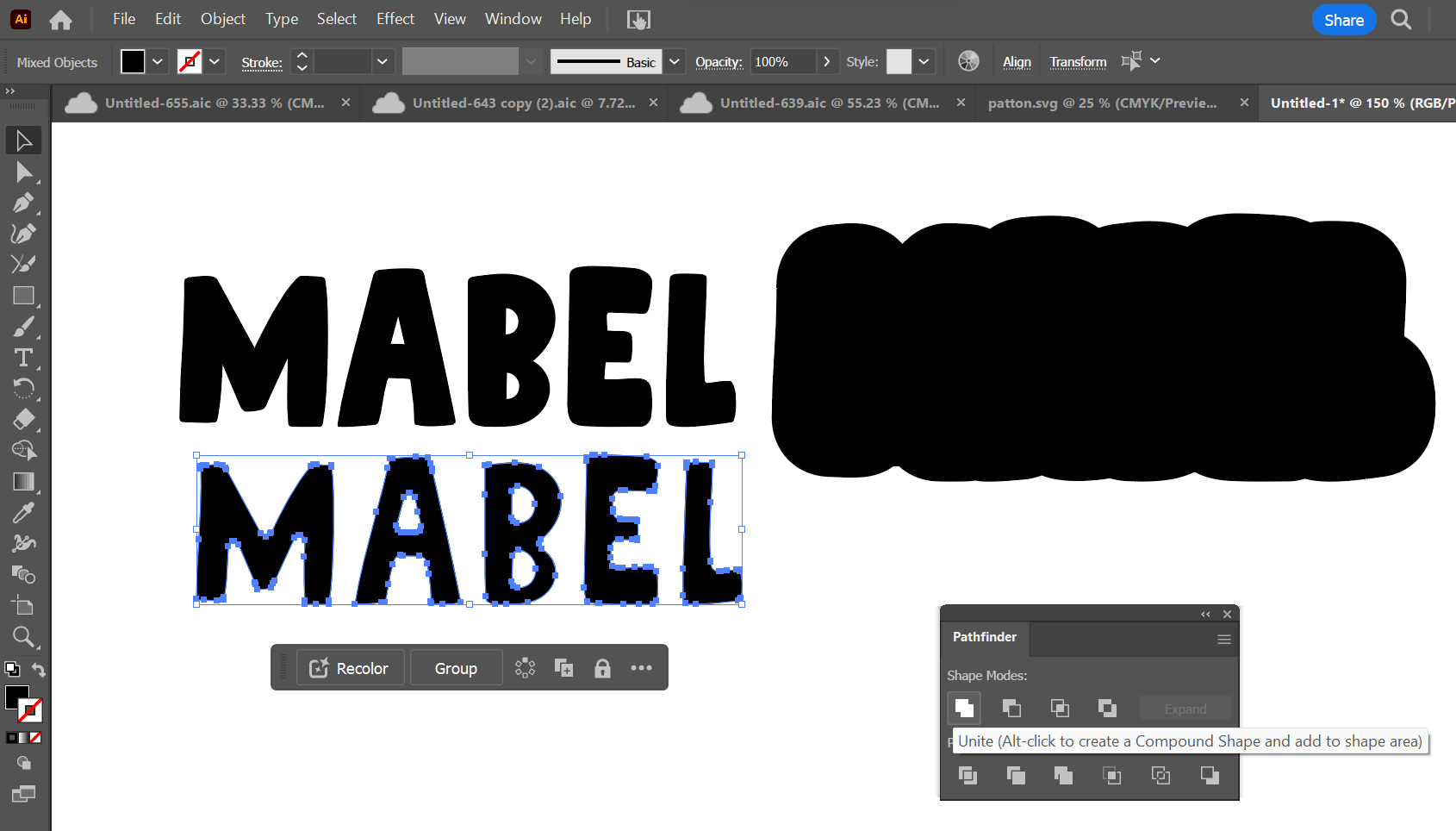
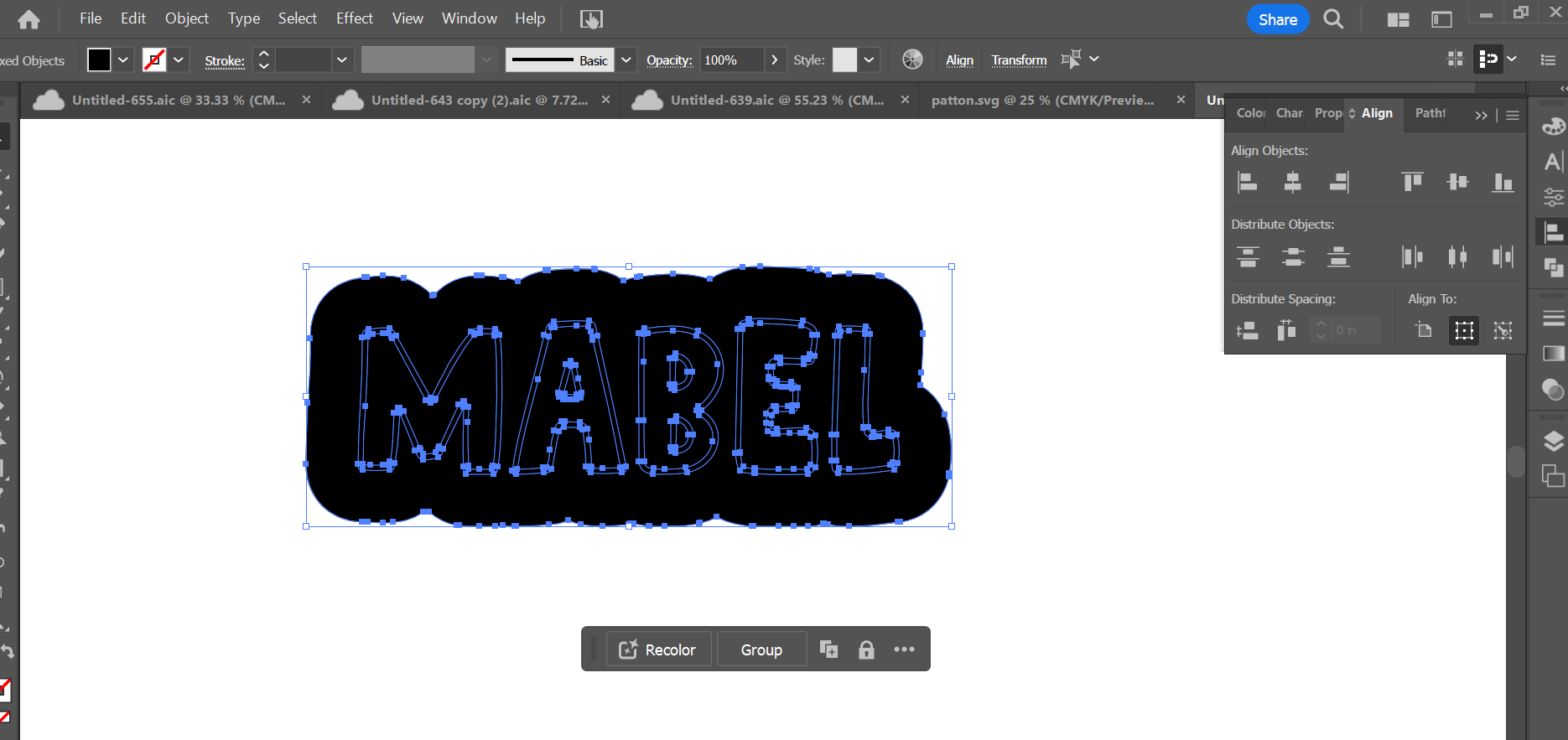
Highlight each set of letters (your original version of the text and the inset text) separately and unite those as well. This step is especially important if using a script font or a font where your letters overlap. If you do not unite them, they will cut out individually instead of as one solid piece!
-
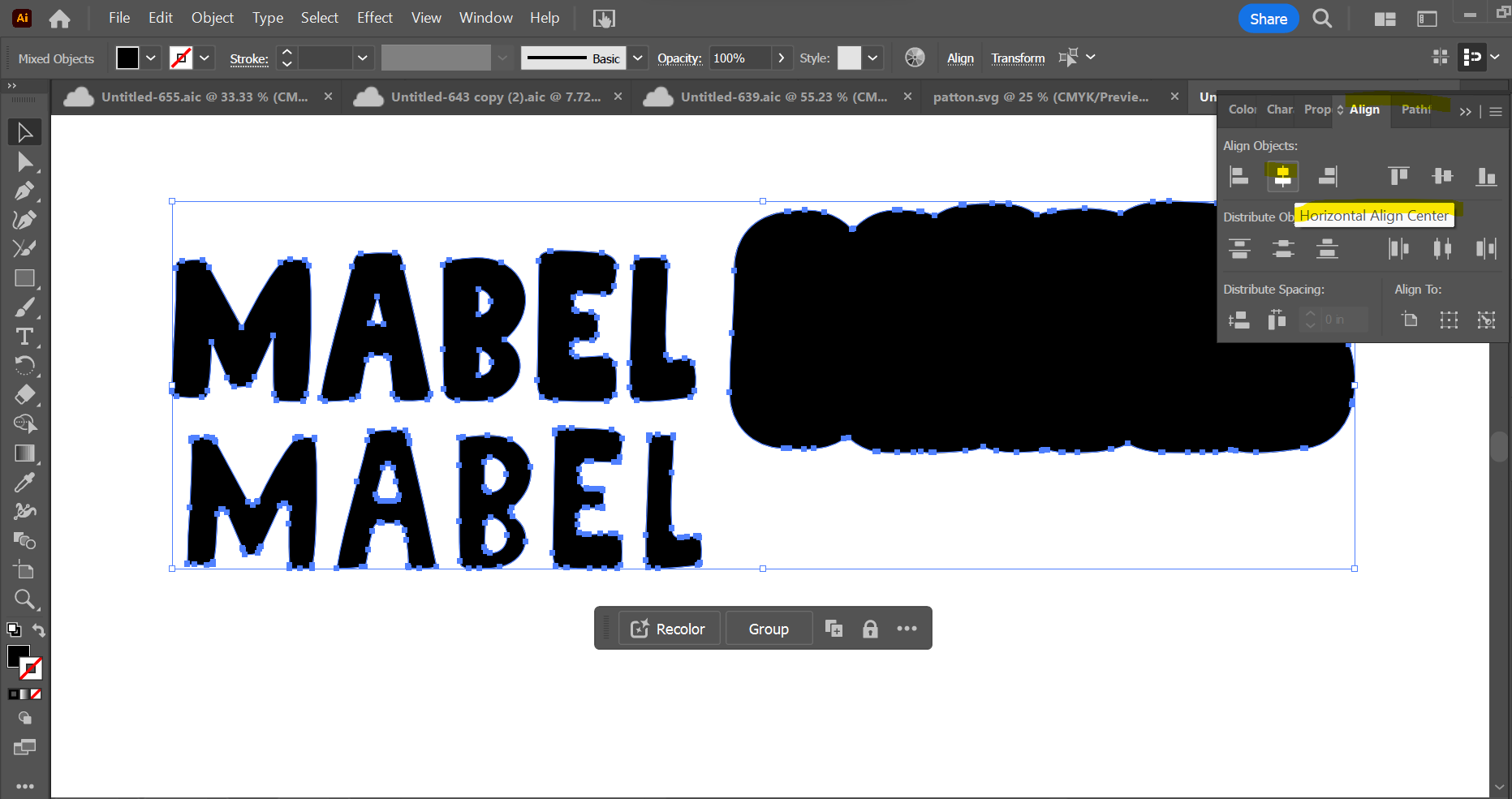
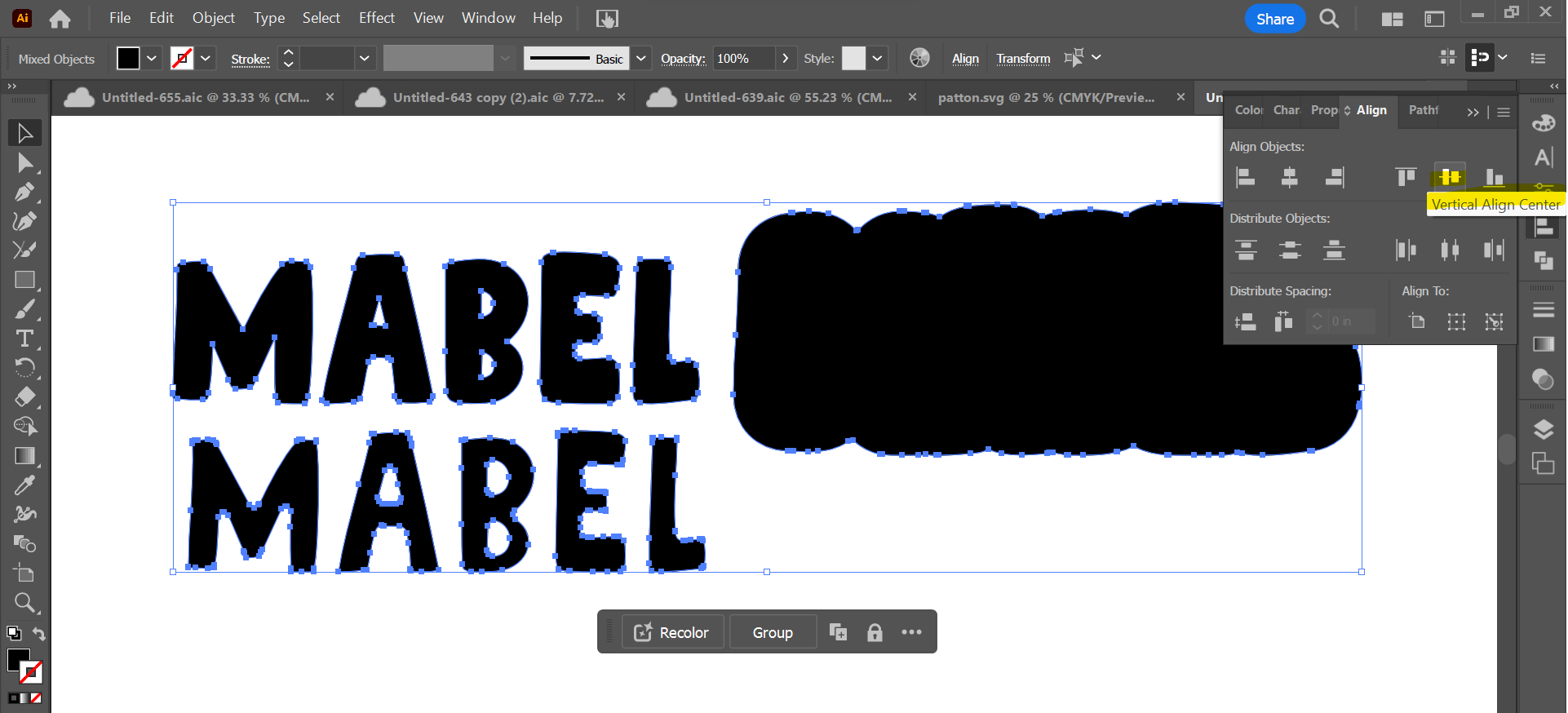
Once each set has been united (you may also hear it described as "welded"), select all 3 and use the "Align" function to align vertically and horizontally by center. To open the "Align" window, do "Window" and select "Align," or use keyboard shortcut SHIFT + F7. (Note that we're including the layered text when aligning these to be sure that it will cover the inset scoring lines once layered, even though it won't remain in this position on your final SVG file.)
-
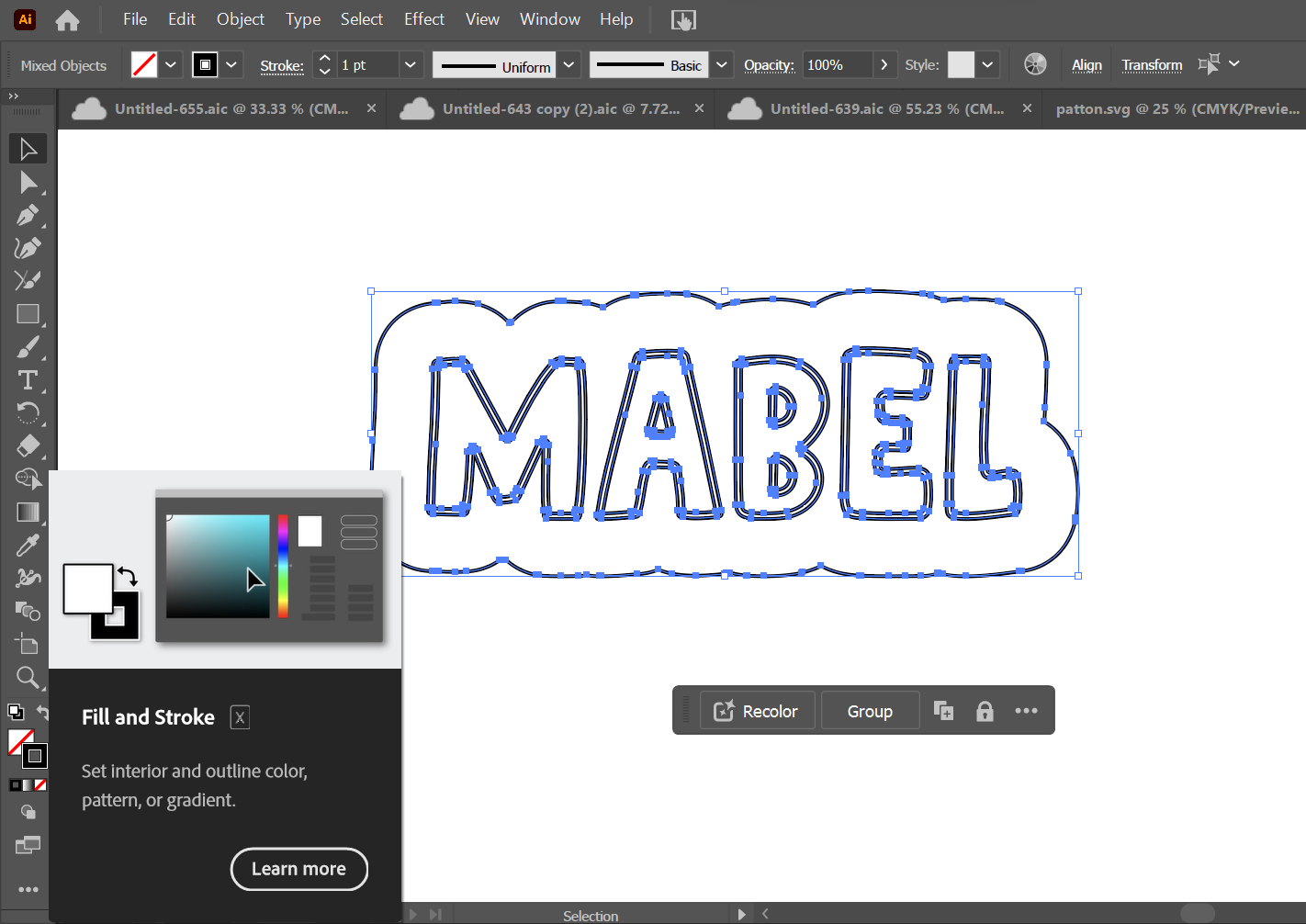
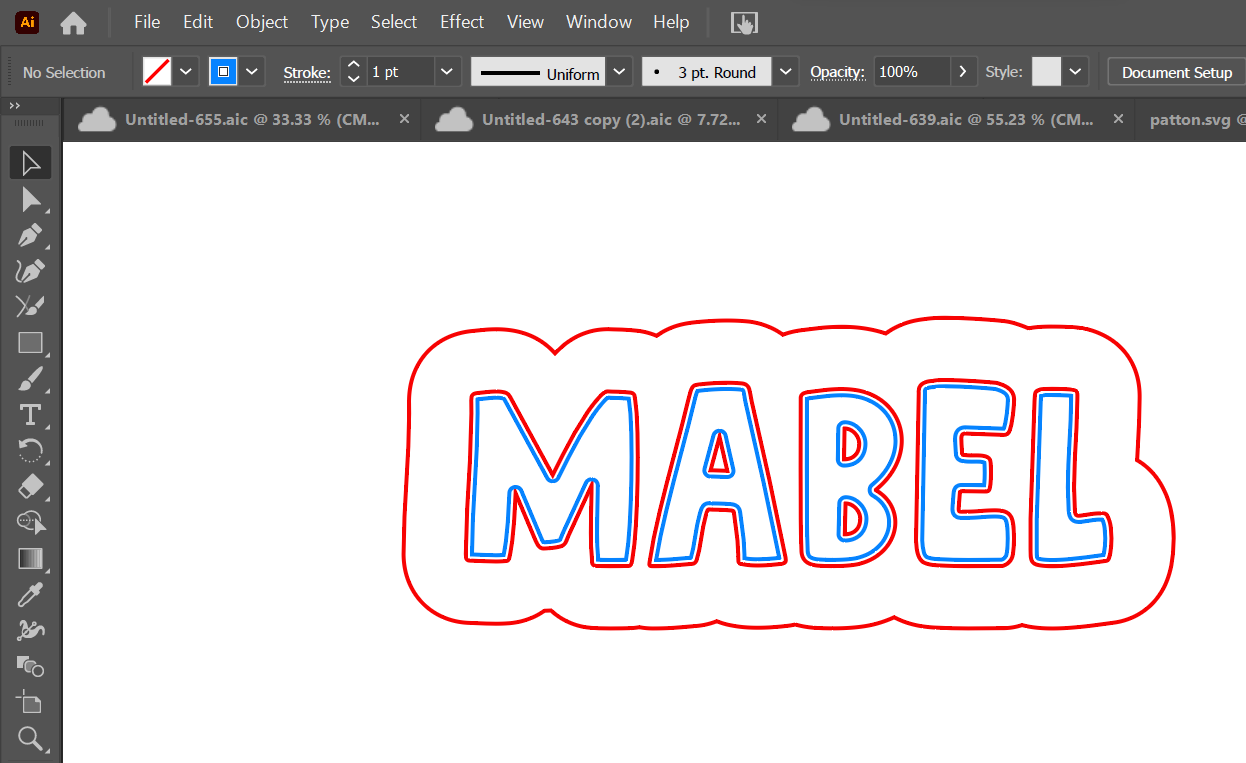
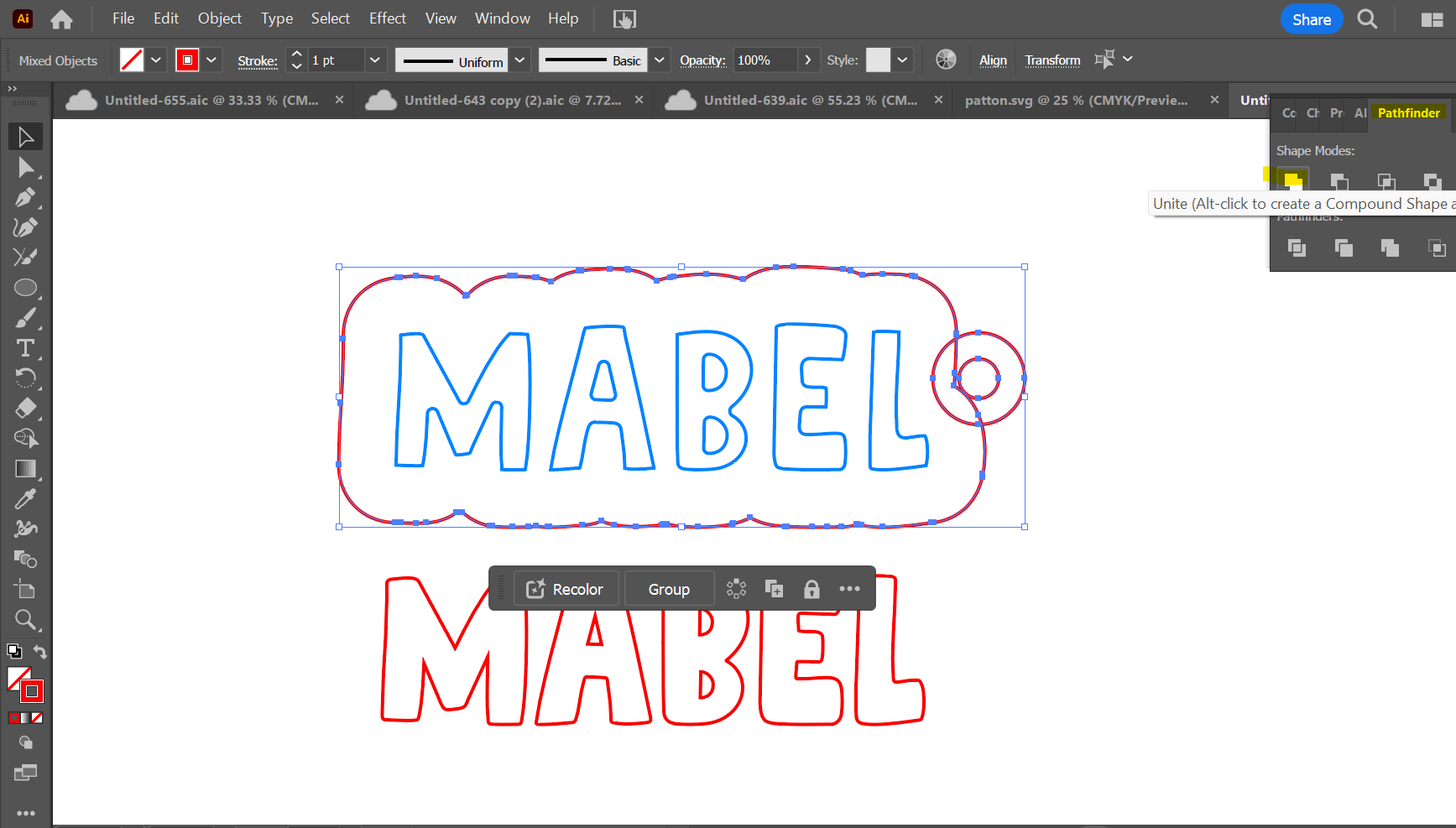
Use the "Fill and Stroke" menu to assign your desired appearance to each element. I use a blue stroke for scoring (the inset name) and a red stroke for cutting (the backer & your layered text) but you can use whatever colors work best for you. By assigning a different color to each group of items, your laser will know they need to be two different functions or settings.
-
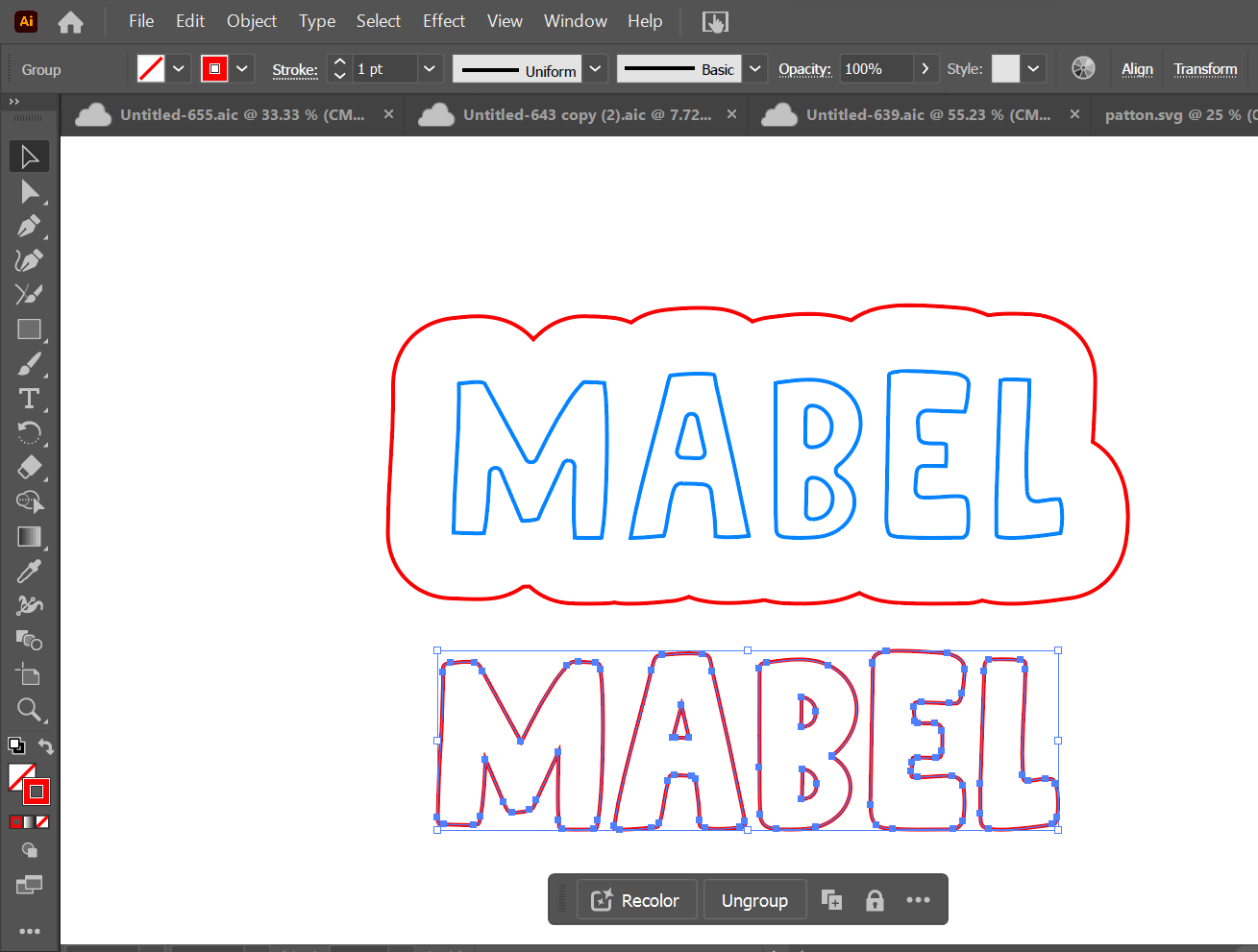
Since you will be cutting your text out to layer it on the backer, you don't want it to stay lined up. You can move it off to the side at this point.
-
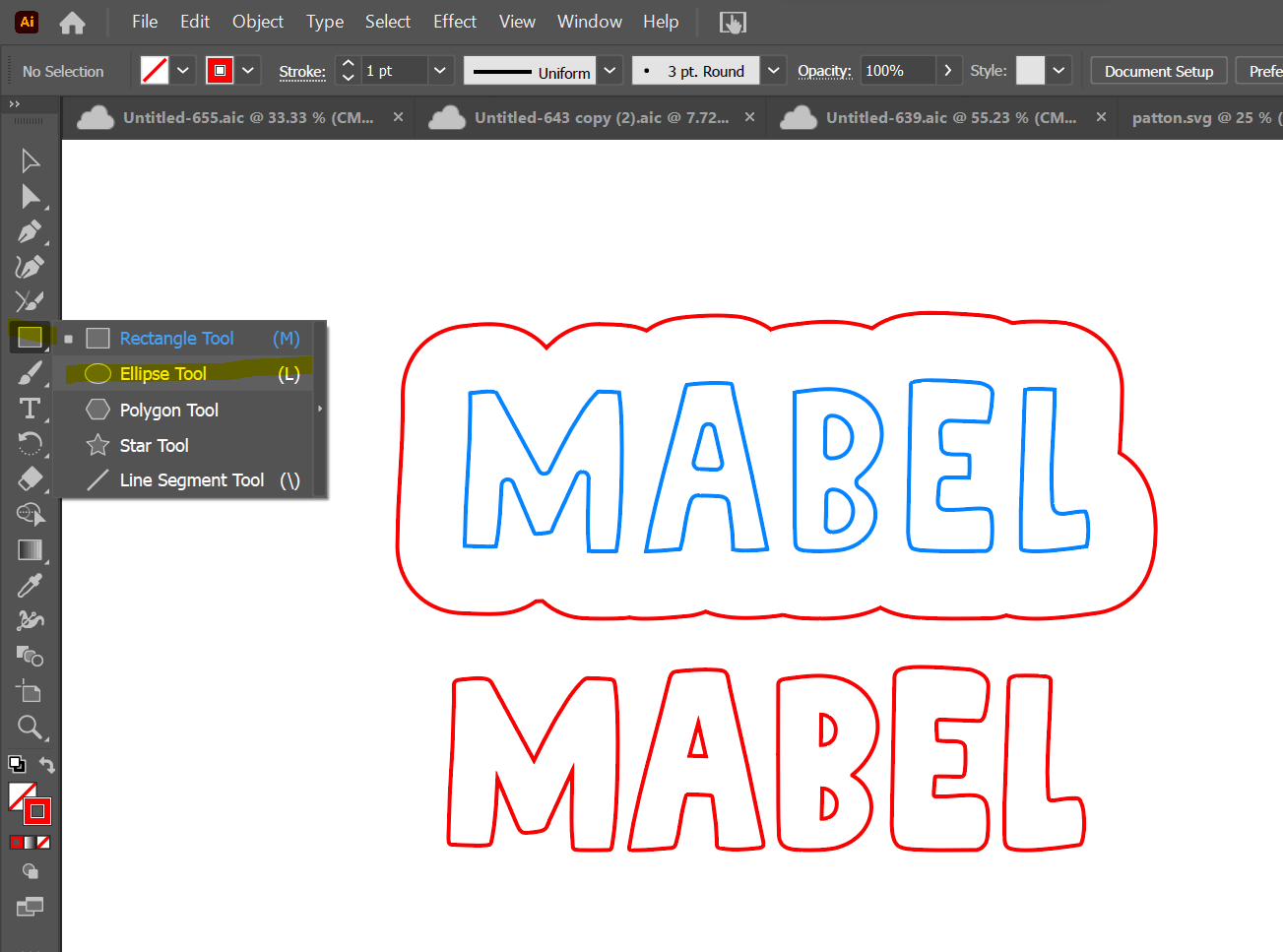
Open the "Ellipse" tool from your toolbar or using keyboard shortcut "L".
-
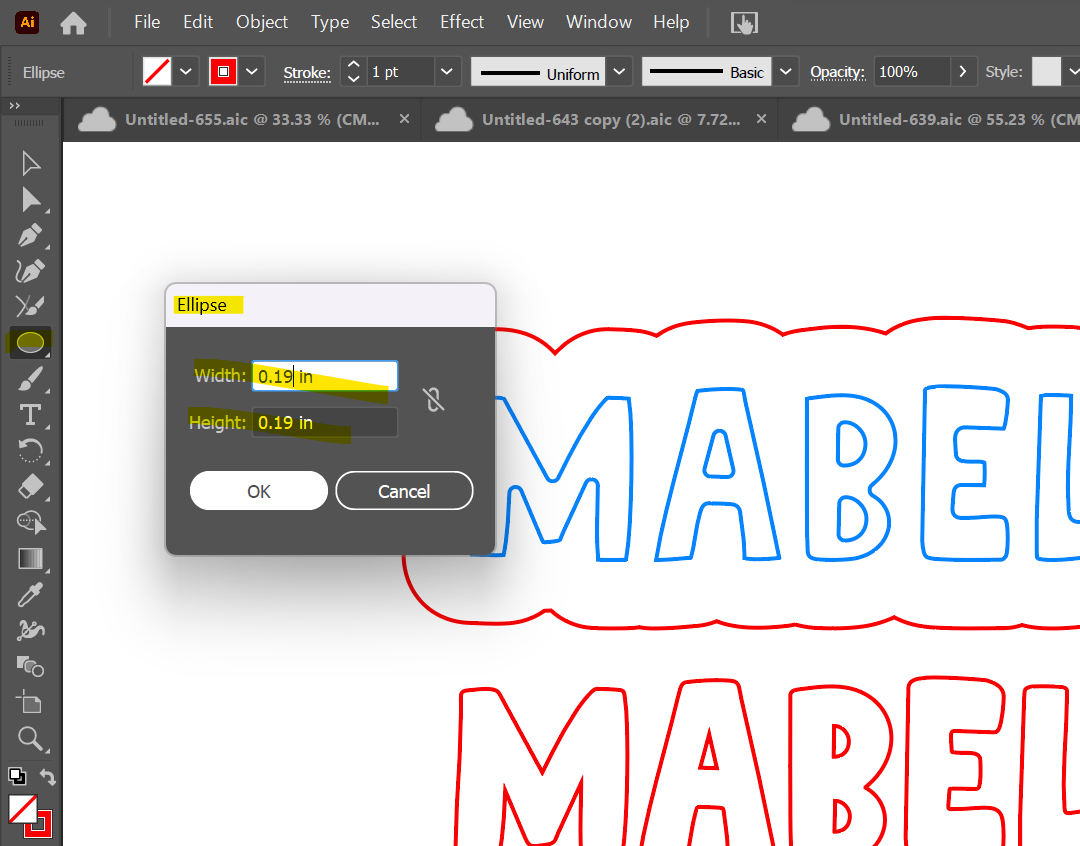
Click on your screen. A window will pop up prompting you to input dimensions. Enter "0.19 inches" for each and click "OK."
-
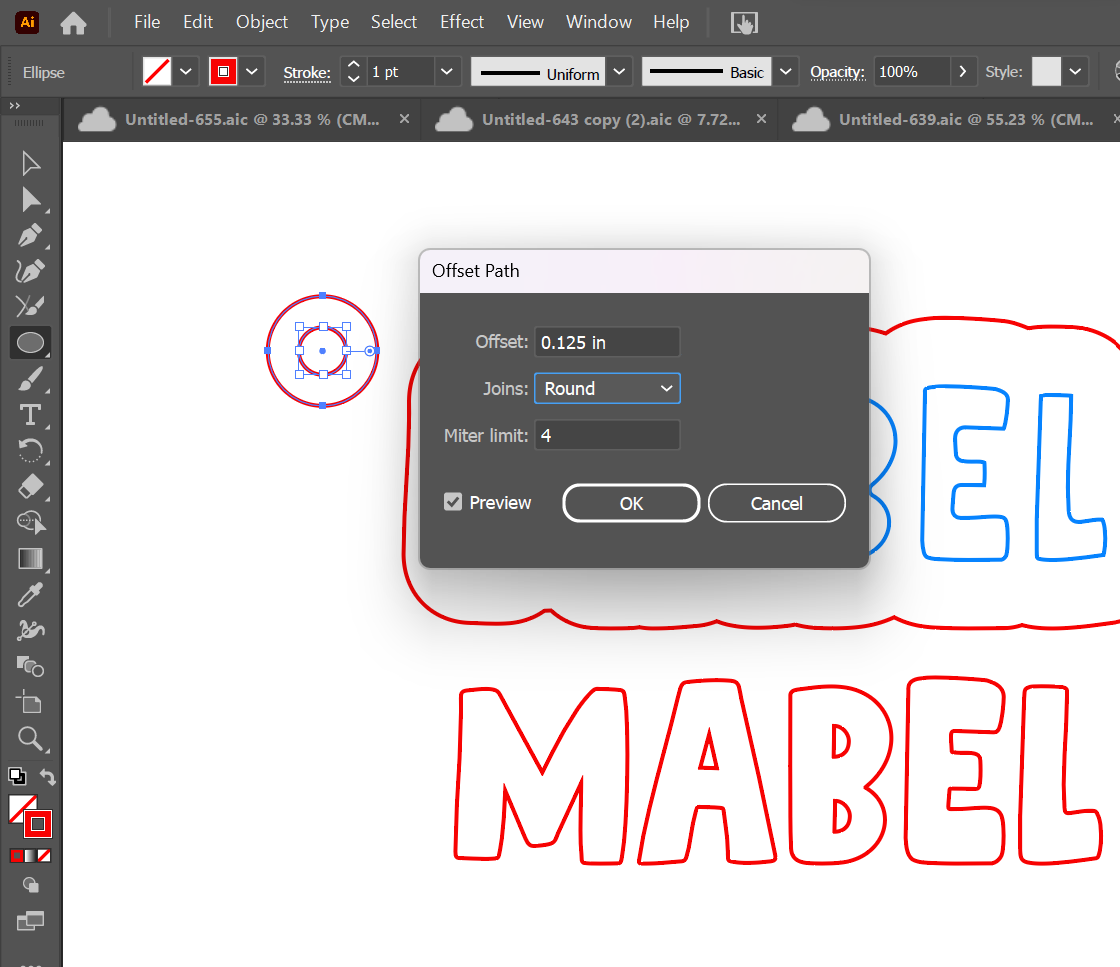
Using the selection tool, select your circle. Then do an offset by using the instructions above and enter 0.125 inches. This will give you an outside circle that measures 0.315 inches.
-
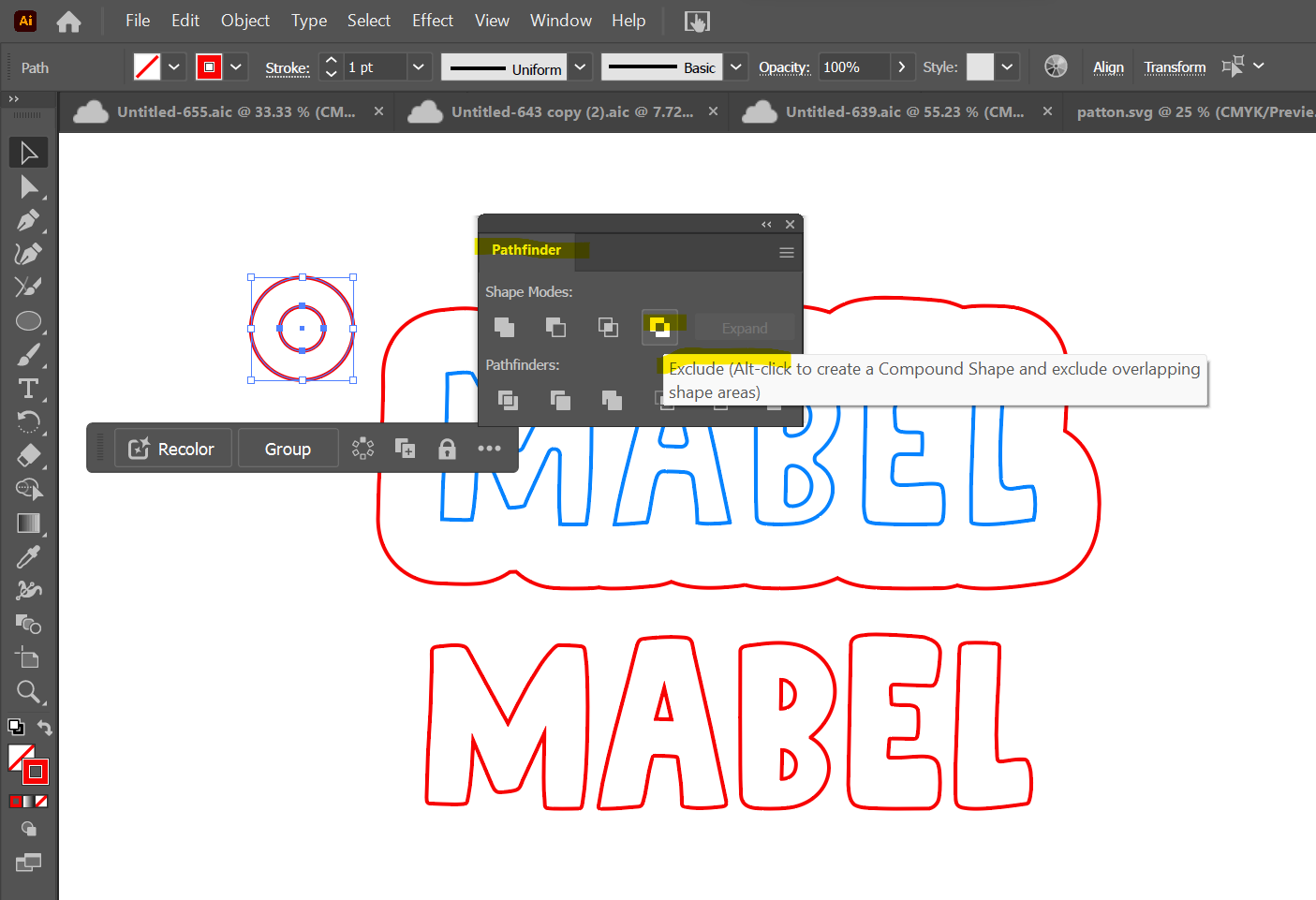
Select both circles and use your "Pathfinder" menu and select "Exclude."
Line up your circles with where you want the hardware to go on your contour backer. Make sure the inside circle is not cut off by the contour cut line you have created. The full inner circle should be on the outside of the contour cut line.
-
Once you are satisfied with the placement, select both the circle piece and the contour outline and do "Pathfinder" function "Unite."
-
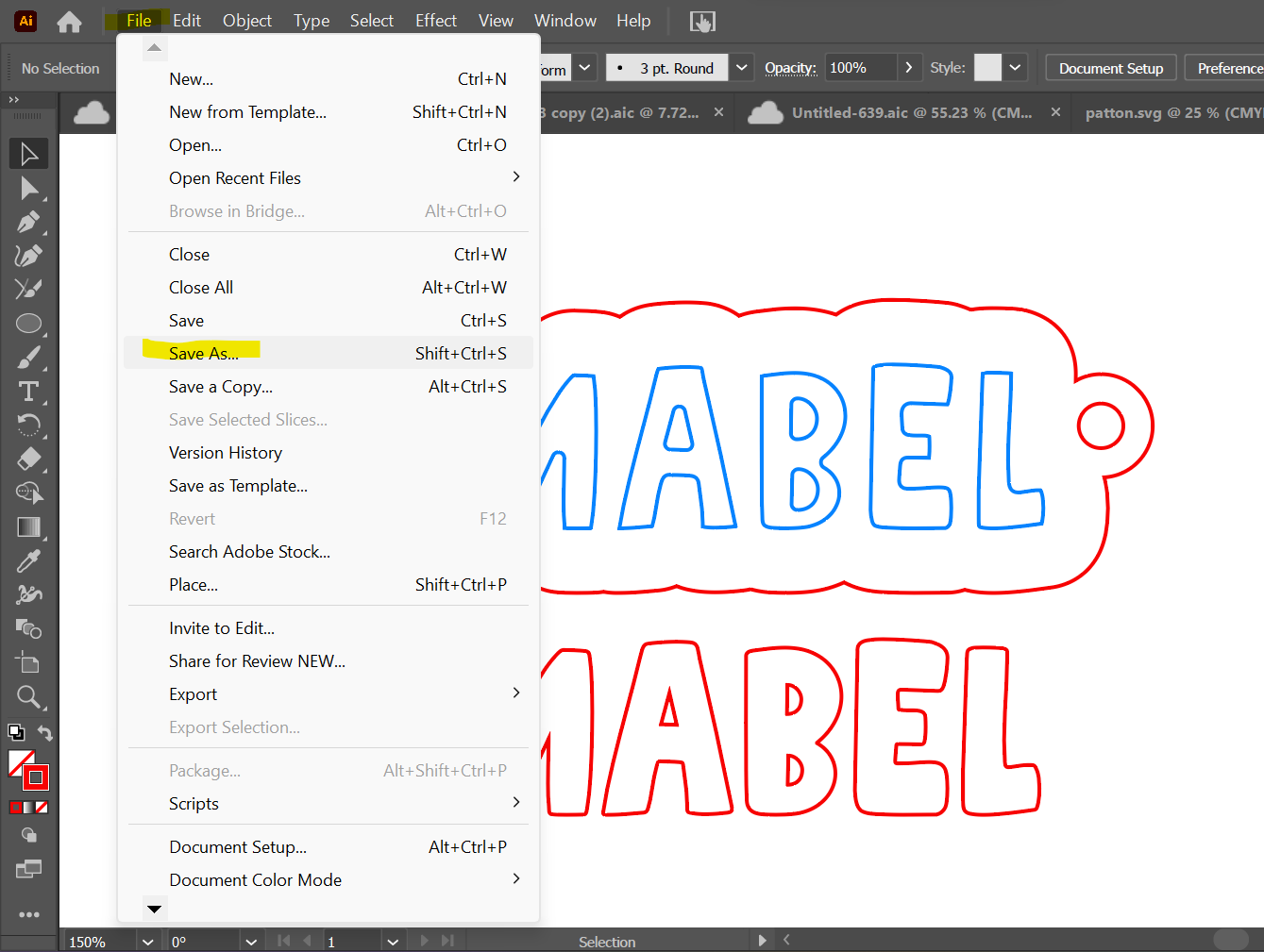
Go to "File" and select "Save As" and save your file as an SVG.
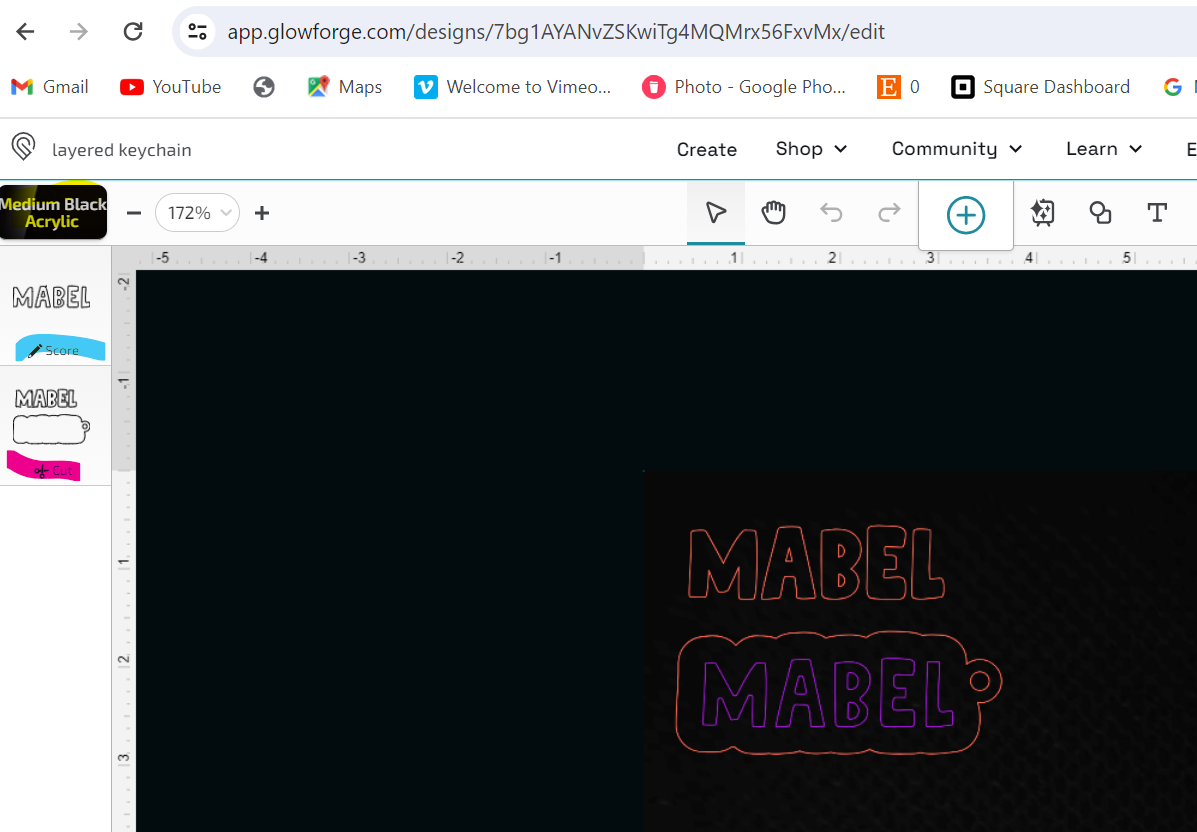
Upload in your Glowforge portal (or whatever program you use to send to your laser if using a different one!)
-
Assign your functions based on the different groups. The inset text will be scored and the rest will be cut.
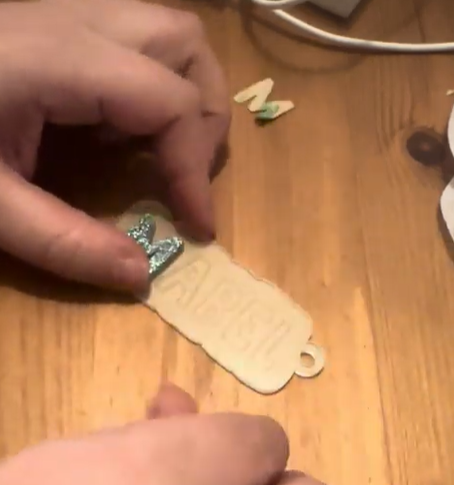
Run your print. If you are using double sided adhesive, only apply it to the back of the material you are cutting your letters from.
-
Assemble by placing your letters over top of the scored placement lines.
-
Add your keychain thingie and your split ring.
Ta da! You are done! I'd love to see pics if you try this yourself. You can tag me @samanthasdoodles on all social media platforms.